Demand follows the shift
Breaks, shift changes and production rhythms can concentrate demand without a universal headcount.
Scenario solution · Factory
A factory drinking-water solution starts with how teams move through the site, when demand concentrates and how a system can remain accessible, maintainable and dependable in an operating environment.
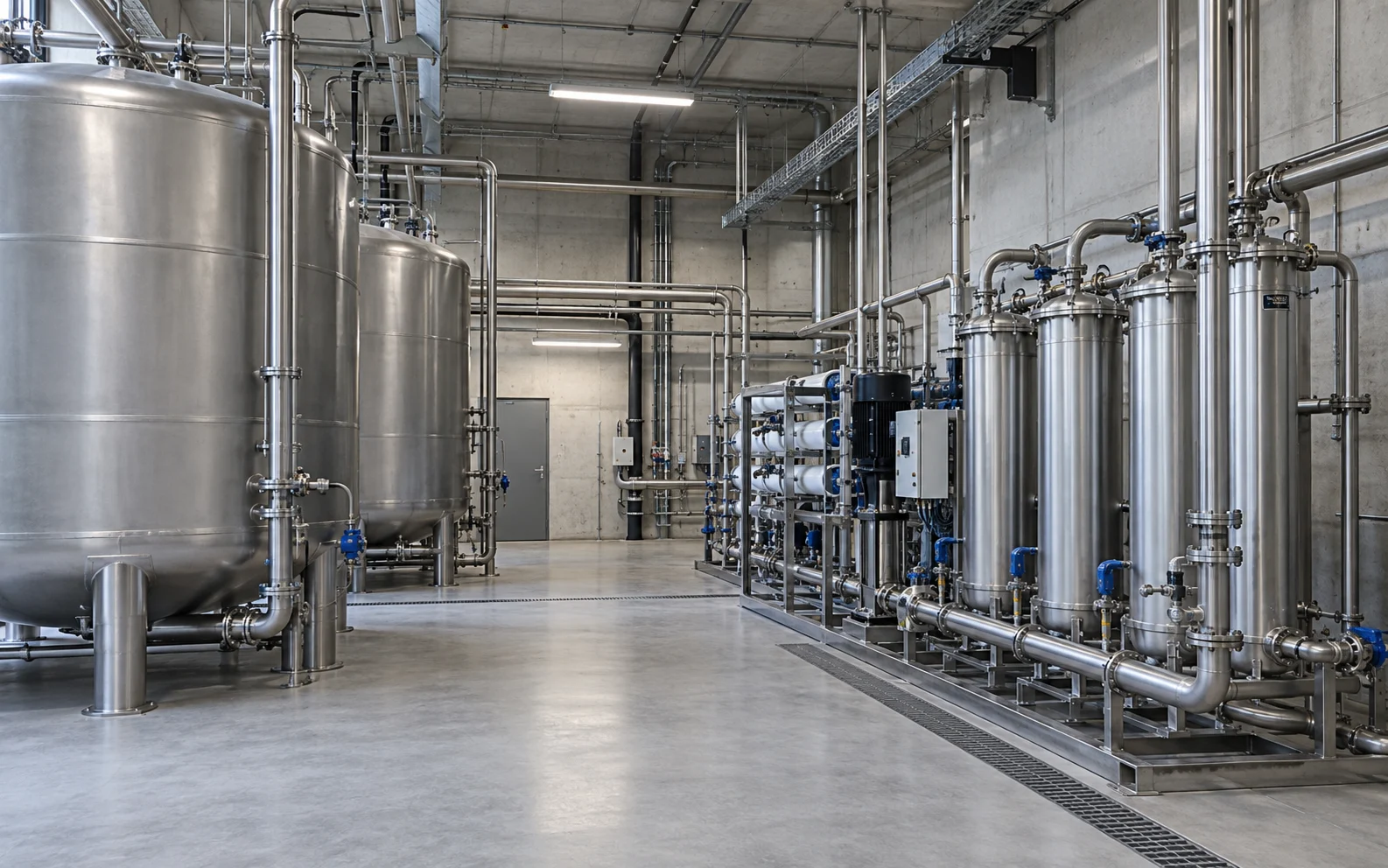
01 — Scenario pressures
Breaks, shift changes and production rhythms can concentrate demand without a universal headcount.
Access, distance and the number of locations affect the solution.
The equipment should remain connected to filters, parts and service support.
02 — People and water-use profile
Gather real operating information rather than applying an unverified people-per-unit formula.
Shift pattern, break rhythm and whether demand occurs in waves or continuously
Where teams work, rest and move through the facility
Need for boiling, ambient, hot or cold drinking water at each location
03 — Recommended direction
Place drinking access around actual movement and the operating schedule.
Use a category-level route that can support single points or a centralized network.
Include installation, maintenance and repair support in the operating plan.
04 — System composition
Understand water conditions before confirming purification.
Consider RO or UF direction against the site requirement.
Plan water options around the workforce routine.
Locate terminal equipment around the factory’s real circulation.
Keep maintenance and parts connected after handover.
05 — Product-category direction
These links lead to existing product categories; no SKU is presumed or invented.
06 — Installation conditions
Confirm water, power and drainage near each intended point.
Keep placement safe, reachable and compatible with working routes.
Assess extended piping, drilling or other additional work separately.
07 — Service capability
Confirm water, power, drainage, access and the boundary of any additional site work before delivery.
02Keep filter supply and routine care connected to water conditions, use and the selected configuration.
03Connect parts, technical judgement and repair coordination to the equipment after handover.
Related knowledge
08 — FAQ
There is no verified universal ratio. Confirm shifts, peak periods, location, required water types and site utilities before configuration.
It can be assessed where multiple points, the building layout and the utility route support a centralized system.
Yes, where the selected system and site conditions support the required water options; confirm the operating need first.
09 — Project inquiry
Share the setting, drinking points, use pattern and known water, power and drainage conditions so the next step starts from facts.