Peak demand is the real pressure
A quiet period and a break-time surge are not the same operating condition.
Technology solution · Water heating
A commercial hot-water plan considers how people drink, when demand peaks, what water types are needed and how the equipment can be safely installed and maintained.
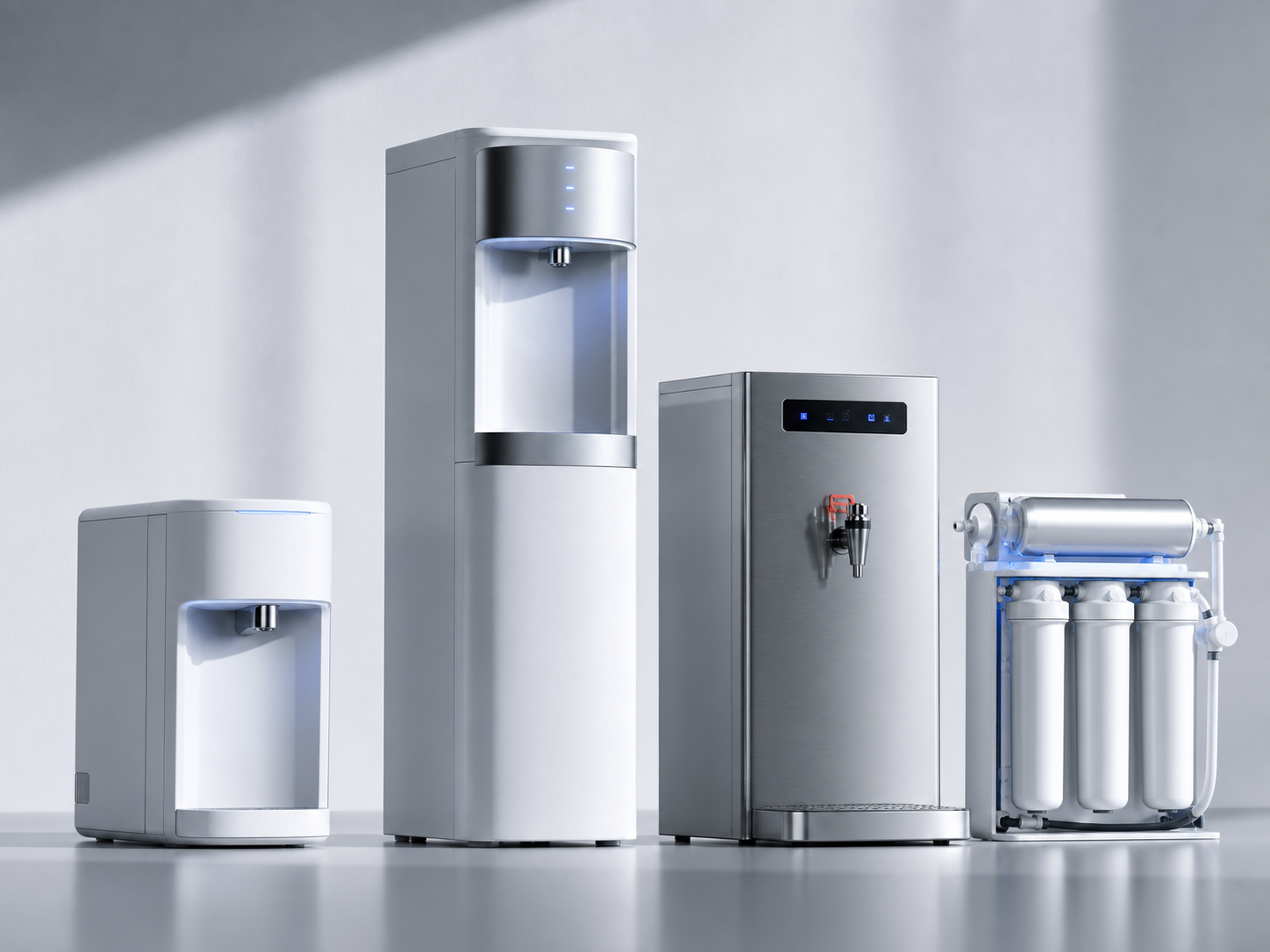
01 — Scenario pressures
A quiet period and a break-time surge are not the same operating condition.
Boiling, warm and ambient drinking options need to fit the routine and the people using them.
Location, water, power, drainage, management and maintenance all affect the operating plan.
02 — People and water-use profile
Use qualitative operating information when confirmed demand data is not yet available.
When people draw water and whether use clusters around breaks, shifts or meal times
Whether boiling water, warm water, ambient water or a combination is required
The distance between users, drinking points and the available water and power conditions
03 — Recommended direction
Start from how water is actually drawn throughout the day.
Use category-level options to match terminal, heating or centralized delivery needs.
Connect installation, handover, maintenance and support from the beginning.
04 — System composition
Confirm how source water reaches the heating or drinking equipment.
Add a purification direction only when the site calls for it.
Plan the required drinking-water options around the site routine.
Place equipment where people can use and manage it safely.
Maintain filters, equipment and repair access through the service path.
05 — Product-category direction
These links lead to existing product categories; no SKU is presumed or invented.
06 — Installation conditions
Confirm the required power arrangement before the equipment is selected or delivered.
Review the practical connections and the safe position of each drinking point.
Allow for daily use, cleaning, inspection and service work.
07 — Service capability
Confirm water, power, drainage, access and the boundary of any additional site work before delivery.
02Keep filter supply and routine care connected to water conditions, use and the selected configuration.
03Connect parts, technical judgement and repair coordination to the equipment after handover.
Related knowledge
08 — FAQ
No. Peak use, required water options, location, installation conditions and management should shape the solution.
Not automatically. Purification is evaluated against source-water conditions and the intended system route.
Confirm water, power, drainage, space, access and any additional site work needed beyond standard installation.
09 — Project inquiry
Share the setting, drinking points, use pattern and known water, power and drainage conditions so the next step starts from facts.