Multiple points create a coordination question
Several floors or zones may call for a planned distribution route rather than isolated equipment.
Technology solution · Central systems
Centralized drinking water can coordinate treatment, heating, distribution and terminal access across a site. It should be considered where the site and operating model justify the extra coordination.
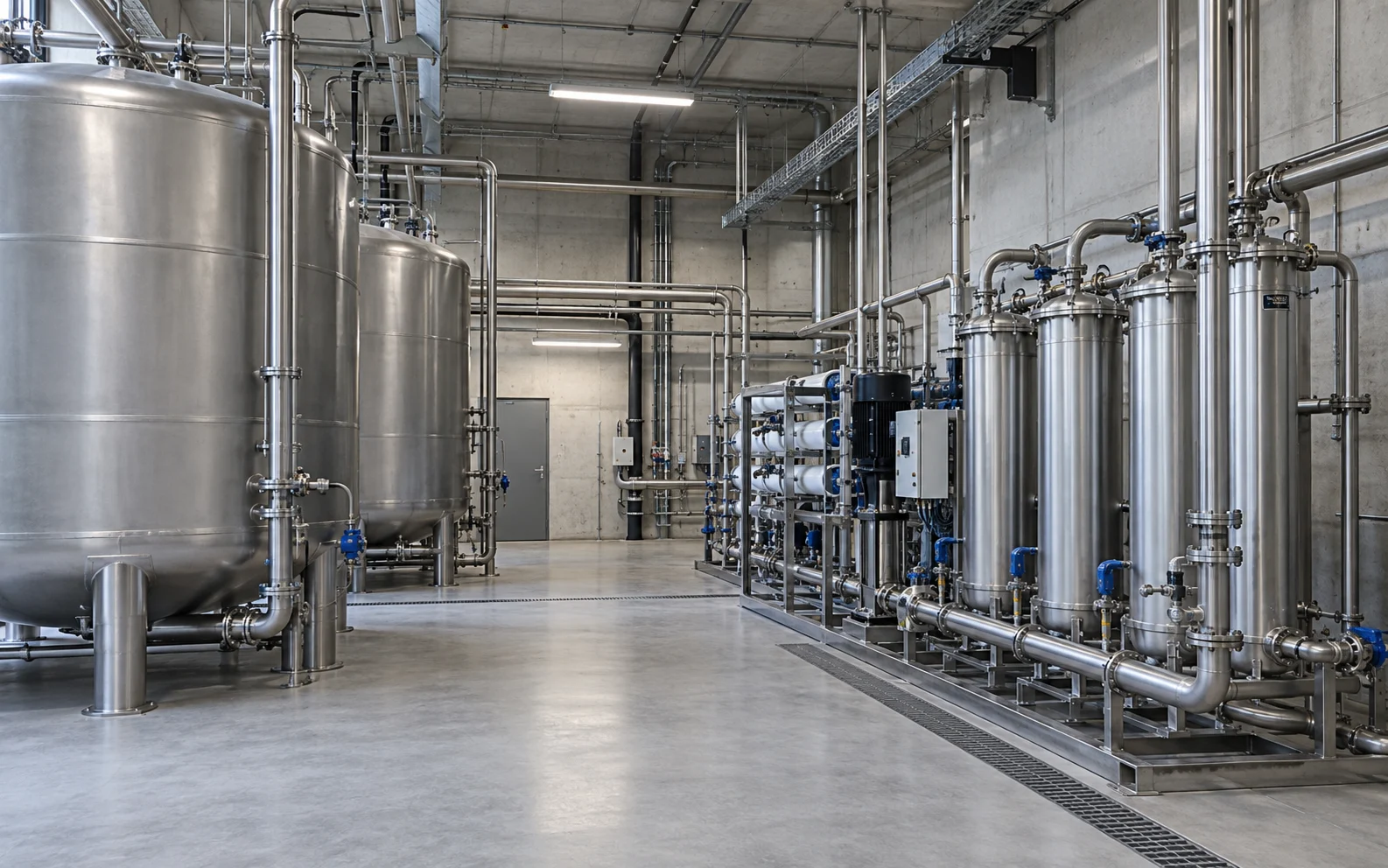
01 — Scenario pressures
Several floors or zones may call for a planned distribution route rather than isolated equipment.
Treatment, heating, terminals and the physical site must be considered together.
Maintenance access and service coordination matter across the whole route.
02 — People and water-use profile
A central system is not assumed simply because a site is large.
Number, location and relationship of drinking points across the site
Whether people need ambient, hot, cold or other water options at different points
Available equipment space, pipe routing, water, power, drainage and maintenance access
03 — Recommended direction
Choose the delivery model around layout and operation, rather than a fixed preference.
Coordinate purification, storage, heating, distribution and terminals.
Review site work, installation phasing and commissioning before committing.
04 — System composition
Treat water at the appropriate point in the system route.
Assess how the system responds to the site’s actual use rhythm.
Provide the water types required at each connected point.
Plan pipe runs and access with the building conditions.
Select product categories for each drinking location.
05 — Product-category direction
These links lead to existing product categories; no SKU is presumed or invented.
06 — Installation conditions
Confirm physical space, pipe routes and access before construction is arranged.
Review the required utility conditions across the system and terminals.
Set a practical delivery, installation, commissioning and handover sequence.
07 — Service capability
Confirm water, power, drainage, access and the boundary of any additional site work before delivery.
02Keep filter supply and routine care connected to water conditions, use and the selected configuration.
03Connect parts, technical judgement and repair coordination to the equipment after handover.
Related knowledge
08 — FAQ
Not necessarily. The right choice depends on the layout, drinking-point distribution, site conditions, operation and expansion requirements.
That is discussed as part of the planned system and terminal configuration; it should not be presumed for every site.
Review drinking points, building layout, utility conditions, equipment space, pipe routing, access and future maintenance.
09 — Project inquiry
Share the setting, drinking points, use pattern and known water, power and drainage conditions so the next step starts from facts.