Workflow sets the right location
A drinking point must fit staff movement and the practical limits of back-of-house space.
Scenario solution · Catering
Catering spaces need a practical drinking-water route that fits kitchen and staff workflows, water options, source-water conditions, installation boundaries and ongoing maintenance.
01 — Scenario pressures
A drinking point must fit staff movement and the practical limits of back-of-house space.
Ambient, hot, cold or sparkling options should be tied to a confirmed use, not added by default.
Water, power, drainage, heat, space and maintenance access should be checked together.
02 — People and water-use profile
Plan around working patterns and site conditions rather than an unverified user number.
Where staff, front-of-house or guests draw water during service and preparation
Need for boiling, ambient, hot, cold or, where confirmed, sparkling water
Available water, power, drainage, space, access and maintenance route in the actual location
03 — Recommended direction
Find a drinking-water route that works with preparation, service and staff movement.
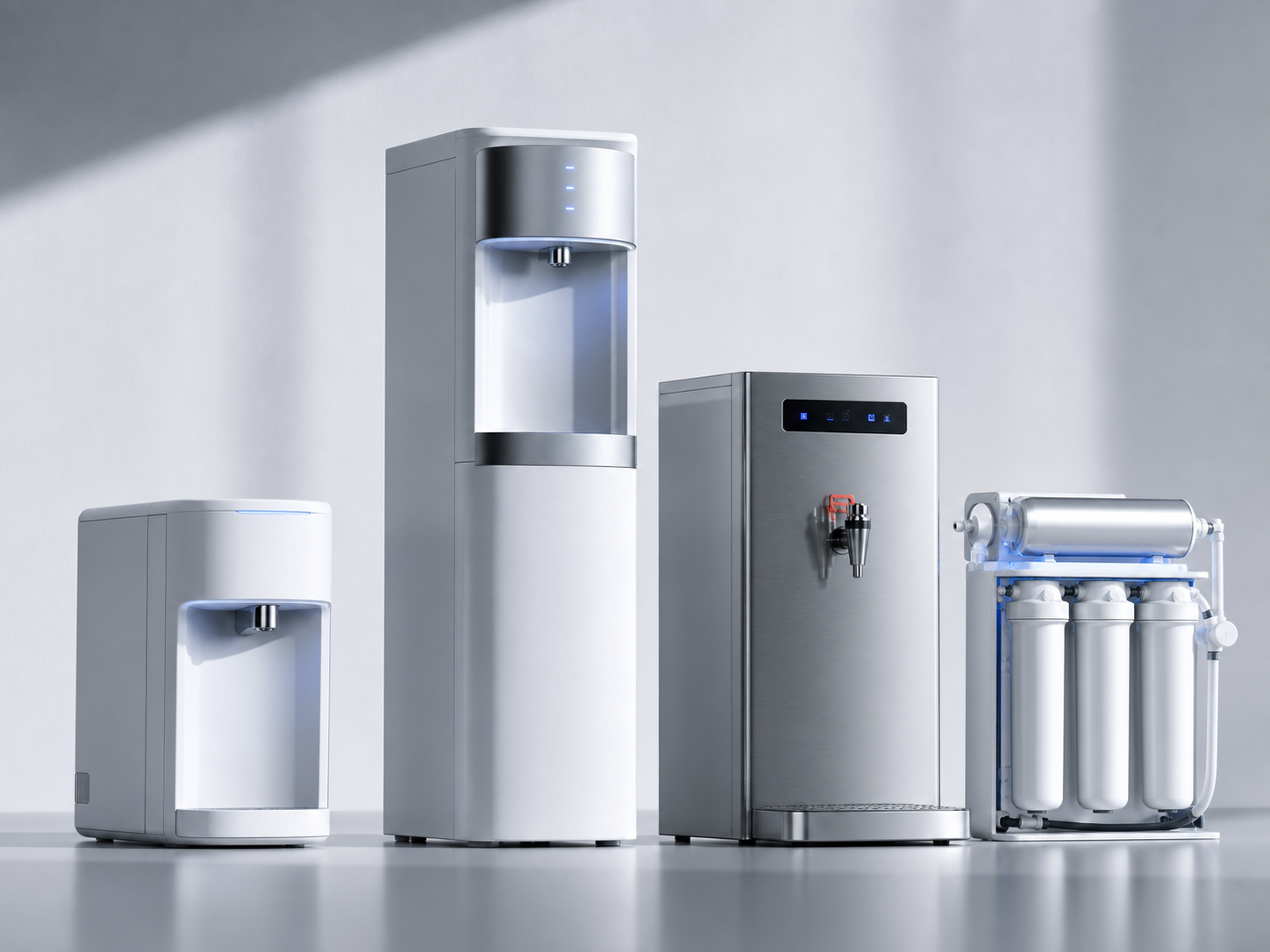
Use a category-level route for terminal, heating, purification or sparkling requirements.
Include filter, installation and long-term support conditions in the plan.
04 — System composition
Review incoming water and the actual use condition.
Consider RO or UF direction where the site assessment supports it.
Set water options around staff or guest requirements.
Plan terminal access around workflow and service clearance.
Keep filters and service access clear after delivery.
05 — Product-category direction
These links lead to existing product categories; no SKU is presumed or invented.
06 — Installation conditions
Confirm water, power, drainage and the actual available space.
Keep the location workable around preparation and service movement.
Allow room for filter replacement, inspection and support work.
07 — Service capability
Confirm water, power, drainage, access and the boundary of any additional site work before delivery.
02Keep filter supply and routine care connected to water conditions, use and the selected configuration.
03Connect parts, technical judgement and repair coordination to the equipment after handover.
Related knowledge
08 — FAQ
No. It is considered only where a guest or beverage-service requirement is confirmed.
It can be assessed against the source water, intended use, selected equipment and maintenance conditions.
Confirm utilities, space, access, workflow, drainage, maintenance route and any additional site work.
09 — Project inquiry
Share the setting, drinking points, use pattern and known water, power and drainage conditions so the next step starts from facts.